

 Shop now New Limited Edition Gift SetsGive the gift of great hair this holiday season, with something for every hair type.












PRO TIPS
What Shampoo Ingredients Actually Do, According to Hair Professionals
We asked three UK hair experts to talk us through what's actually in your shampoo, which ingredients matter for your hair type, and how to read a label without the anxiety.
Grab a cheap shampoo bottle from any supermarket shelf and you'll find a frankly perplexing ingredients list. Words that sound like they belong in a chemistry book and not your bathroom will pop out at you like little alarm bells: sodium laureth sulfate, cocamidopropyl betaine, parabens. It's no wonder that shampoo ingredients have become one of the web's most talked-about panic points, with entire corners of TikTok dedicated to calling them "toxic".
Here's the short version. Almost everything on that label is doing one of three jobs: cleansing, conditioning, or stopping the formula from spoiling. Very few of them deserve the panic.
Our Experts

Jade Summers
AIT, Trichologist, Colour Specialist and Davines Guest Artist

Sophie Trinder
Co-director and stylist at Trinder Hair Studios, St Albans

Melissa Timperley
Award-Winning Hairdresser, Salon Owner and Founder of MT MasterClass
What does shampoo do?
At its core, shampoo has one very important job: to whisk dirt, oils, product build-up and pollution away from your strands and scalp, all without stripping essential moisture. It's a bit of a balancing act, but it's the key to creating a clean, healthy foundation for the rest of your routine.
"Just as you wash your face to remove dirt and sweat, shampoo removes excess sebum, product residue and impurities," says Melissa Timperley, award-winning salon owner of Melissa Timperley Salons in Manchester.
Sophie Trinder, co-director and stylist at Trinder Hair Studios in St Albans, agrees. "This encourages a healthy environment to support hair growth and minimise scalp conditions that can be exacerbated by not washing regularly."
It might feel overwhelming, but understanding how the ingredients in shampoo work just requires a little bit of context. And looking after your scalp starts with the cleanse.


Is shampoo bad for your hair?
The short answer is no. And skipping washes won't make it any healthier either.
This is where things get confusing, though. If you use a shampoo that's too harsh for you, you could end up with dry and colour-faded hair. If you try a formula that's too rich and nourishing, fine hair could end up flat and heavy. Your perfect shampoo is personal to you.
So when shampoo gets blamed, it's almost always the match that's wrong rather than the washing.
How does shampoo clean hair?
Shampoo cleans with surfactants, and the reason it needs them is simple. Water and oils don't mix.
That's a problem when your hair is coated in oil and you're trying to wash it out with water. This is where surfactants come in, acting as a bridge between the two. One end of the surfactant molecule clings to oil and grime while the other end thrives in water. Together, Trindersays, they lift debris away from the hair shaft by forming a structure called a micelle, which can then be rinsed away. "This is the same technology as is used in micellar water to take off makeup."
Worth knowing, because it also explains why lather isn't a measure of cleanliness. Foam is a by-product of some surfactants, not a sign they're working harder.
Why hair experts recommend a double shampoo
Two cleanses work better than one, which is why many hair experts recommend a double shampoo. "The first cleanse removes surface build-up," explains Timperley. Then, without grime getting in the way, "the second cleanse allows other targeted ingredients, like hydrating, volumising or colour-protecting ingredients, to work more effectively."
One cleanse is usually plenty. Two is worth the extra minute after a heavy styling week, a workout, or a few days of dry shampoo. If build-up is the bigger issue, clarifying your hair with a dedicated formula handles it in one wash.
Are there bad shampoo ingredients?
Rarely, is the honest answer. Experts say there are very few inherently "bad" or "good" shampoo ingredients, and the context, concentration and formulation all matter far more than the name on the label.
It's not as easy as knowing what ingredients to avoid in shampoo. A sulphate in one formula, balanced with conditioning agents and used at a sensible concentration, behaves differently to the same sulphate in a cheap, unbalanced mix.
You can't really demonise an entire category of ingredients, especially as they're always under careful review. In the UK, every cosmetic product needs a safety assessment before it can go on sale, and ingredients of concern are restricted at defined concentration limits.
"Safety is determined by scientific evidence reviewed by regulatory bodies," says Trinder. "Extensive research and testing goes into determining the optimum composition of a final product, so there are no inherently bad shampoo ingredients."

What ingredients to avoid in shampoo
There's no universal blacklist, but there are three groups worth knowing about, and which one applies depends on your hair.
Take sulphates, for example. Yes, they've got a negative reputation, "but they're simply cleansing agents,"confirms Jade Summers, AIT, Trichologist, Colour Specialist and Davines Guest Artist. "For someone with an oily scalp or heavy product use, a sulphate shampoo may be entirely appropriate. On the other hand, someone with a very dry, sensitive or highly processed hair type may benefit from a gentler cleanser."
Heavy silicones are the second group. They coat the hair to boost shine and manageability, which is lovely on coarse or unruly hair and a fast route to limp roots if yours is fine or prone to build-up.
Third, strong synthetic fragrance, one of the more common culprits behind a reactive or itchy scalp. Fragrance-free formulas exist for exactly that reason.
None of them are villains, though. "The same principle applies to ingredients such as silicones and preservatives," says Summers. "They're not inherently harmful and often perform important functions like protecting the hair, improving manageability or keeping a product safe and stable."
What are parabens in shampoo?
Plainly, they're preservatives. They have an important job: stopping bacteria and mould from growing in a bottle that lives in a warm, damp bathroom for months on end.
Without something doing that job, shampoo would spoil, and a contaminated bottle is a far more pressing problem than the preservative in it. Parabens are permitted in UK cosmetics within set concentration limits, and the two most widely used, methylparaben and ethylparaben, have been assessed as safe at those levels.
Plenty of brands, Davines included, use alternative preservative systems instead. That's a formulation choice rather than a safety correction.
Rather than getting caught up in whether or not an ingredient is good or bad, Summerssuggests choosing a well-formulated and reputable product that's suited to your individual hair and scalp needs.

Professional shampoo vs supermarket shampoo
It comes down to who the formula was built for. "Professional formulations are typically developed to target specific hair and scalp concerns and are designed to be recommended following a professional assessment," explains Summers.
Mass-market formulas are designed to appeal to a much wider audience on a budget, with less considered surfactant blends, and sometimes more emphasis on look and smell than on long-term hair health.
We know that grabbing a cheap and cheerful formula is tempting, and if your hair and scalp are fairly straightforward, it might be all you need. The case for a professional formula gets stronger the more specific your concern.
There's no one-size-fits-all solution, which is why Summersrecommends matching your shampoo to your own hair type, scalp health, chemical history and styling habits, ideally with the help of a professional.
She points to Davines' approach to sustainable haircare and sourcing. "Davines is a certified B Corp and continues to invest in responsibly sourced ingredients and regenerative agriculture. I also appreciate that they celebrate the origins of many of their ingredients, helping to create a stronger connection between the product, the land and the people who grow it."
How to choose a shampoo for your hair and scalp
Start with your scalp, then your lengths. Your shampoo is cleansing your scalp, so pick it for whether yours runs oily, dry, sensitive or flaky. Then tailor your conditioner to your mid-lengths and ends, which are often telling a completely different story.
Three questions narrow it down fast. Is your hair colour-treated or chemically processed? Does it go flat within a day? Does your scalp flare up with fragrance? Each answer rules a group of formulas out.
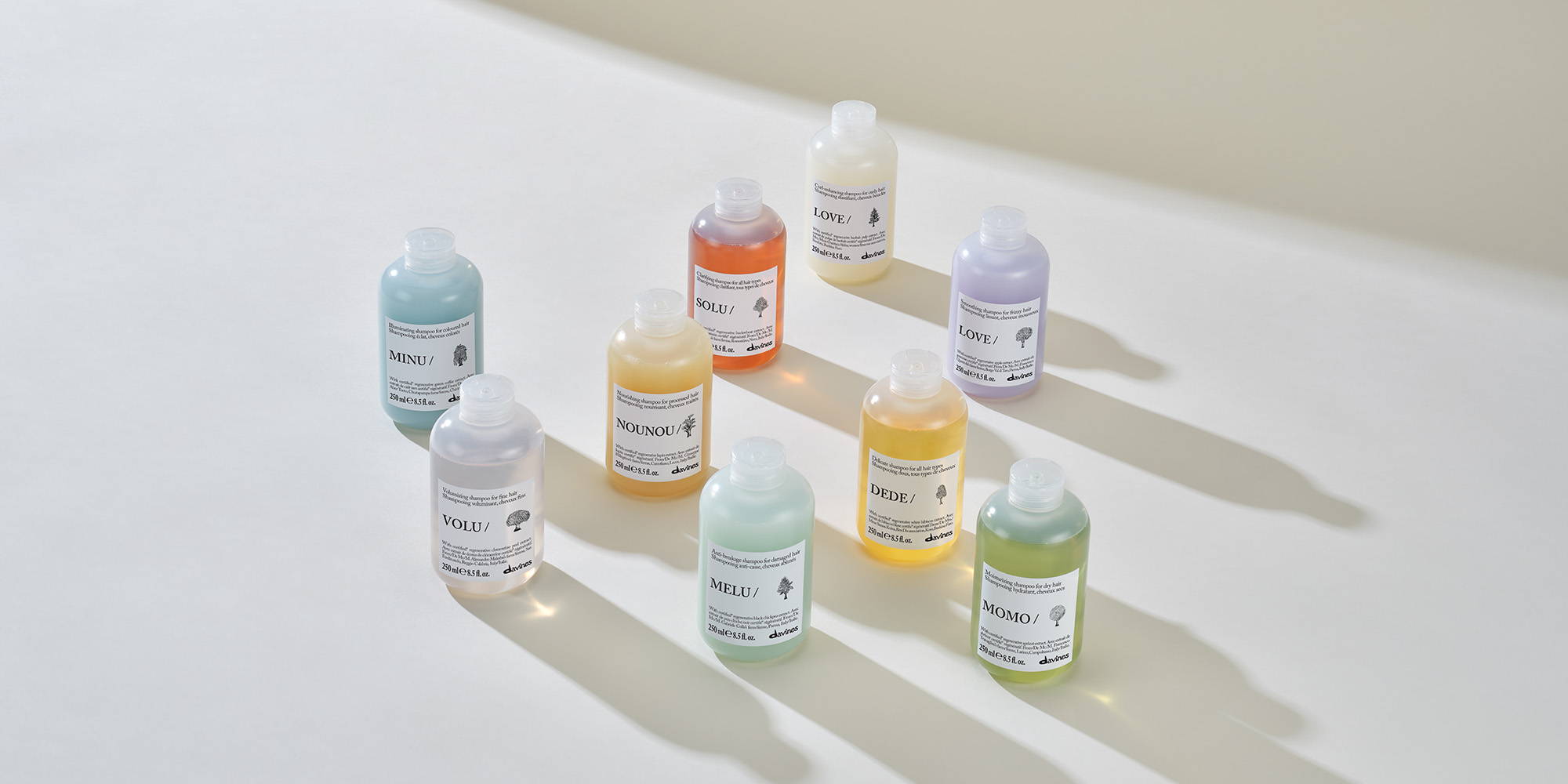
Thankfully, with Davines, you needn't sacrifice efficacy or great ingredients for sustainability. The newly reformulated Essential Haircare line is proof that performance, transparency and sustainability can coexist, with a shampoo mapped to each hair and scalp type rather than one formula stretched across all of them. Browse the full shampoo range to find yours. Plus, you can repurpose our bottles as little plant pots.
For us, sustainability and hair health aren't passing trends, they're the whole point.
And if you're not sure where you sit, a stylist will tell you in two minutes what a month of trial and error might not.
Want more expert advice?
If you'd like tailored advice to suit your hair needs, visit your nearest Davines salon to speak to one of our experts.

Frequently asked questions about shampoo ingredients
Are sulphates bad for your hair?
No. They're cleansing agents, and whether they suit you depends on your hair. Oily scalp, or heavy product use? A sulphate shampoo might be exactly right. Dry, colour-treated or chemically processed hair, or a scalp that flares up easily? A milder surfactant will treat you better.
What are the main ingredients in shampoo?
Four groups, mostly. Surfactants do the cleansing, conditioning agents smooth everything down afterwards, preservatives stop the bottle spoiling, and the rest adjusts pH, thickness, fragrance and colour. Anything targeting a specific concern sits on top of that base.
Are parabens safe in shampoo?
They're preservatives, permitted in UK cosmetics within set concentration limits, and the most widely used have been assessed as safe at those levels. Many brands now use alternatives instead, which is a formulation preference rather than a safety correction. Shampoo needs a preservative of some kind, because a contaminated bottle is the bigger risk.
How do I know if a shampoo suits my scalp?
Judge it on how your scalp feels between washes, not on how your hair looks the moment you step out of the shower. If it suits you, your scalp stays comfortable, neither tight and itchy nor greasy again by the next morning. Tightness or flaking usually means it's too stripping. Oil coming back fast can mean it isn't cleansing thoroughly enough.
Where can I find shampoos without harmful ingredients?
Look for a brand that publishes its full ingredient list and explains why it formulates the way it does, rather than one that markets on what it leaves out. A free-from list tells you nothing about what's actually in the bottle, or whether it suits your hair. Davines publishes complete ingredient lists across its shampoo range, and formulates with biodegradable surfactants and responsibly sourced ingredients.
Does lather mean shampoo is working?
No. Foam is a by-product of some surfactants rather than a measure of cleansing, and low-lather or sulphate-free formulas can clean just as well. Hair that's heavily coated in product will often lather less on the first cleanse, simply because the surfactant is busy.
Read more!

Meet the new Davines Holiday Gift Set Collection Discover our 2026 gift guide full of sets tailored to all hair...

PRO TIPS How to Spot Heat Damaged Hair, and What Actually Helps We asked three UK hair experts to share...

How To Align Your Hair Treatments With Your Hair Growth Cycles Understanding your hair growth cycle is one of the...